The everyday questions buyers ask before purchasing in Cocoplum — property taxes, the homestead exemption, HOA and condo fees, flood insurance, and short-term rental rules.
What are property taxes like in Cocoplum?▾
Property taxes in Cocoplum are assessed annually by the Miami-Dade County Property Appraiser. Once the school, county, and municipal millages are combined, effective rates typically land between 1.8% and 2.3% of taxable value — meaningfully below most Northeast and West Coast markets, but higher than the headline "Florida has no state income tax" sometimes implies. Tax bills mail in November and earn a 4% discount when paid in November (1% off per month through February). The Hoffmann Group can pull the exact prior-year tax bill and millage breakdown from the Miami-Dade County Property Appraiser before you make an offer so there are no surprises at closing.
How does Florida's homestead exemption work for a Cocoplum primary residence?▾
If you make a Cocoplum home your permanent Florida residence and file by March 1 of the year after closing, you qualify for the homestead exemption: the first $25,000 of assessed value is fully exempt, and an additional $25,000 is exempt from non-school taxes — up to $50,000 in total exemption. Just as importantly, the Save Our Homes cap then limits annual increases in your assessed value to 3% (or CPI, whichever is lower) for as long as you keep the homestead, which compounds into substantial tax savings over time. New residents moving from another Florida home can also "port" up to $500,000 of accrued Save Our Homes benefit to Cocoplum. Investment properties and second homes do not qualify and will be reassessed at full market value every year.
What do HOA or condo fees typically cover in Cocoplum?▾
Cocoplum HOA dues typically run $700–$1,200/month, covering 24/7 manned gate security, roving patrols, common-area landscaping, the community clubhouse, tennis courts, and waterway maintenance. Dock and seawall repairs on individual lots remain owner responsibilities. Before closing, always request the current annual budget, the reserve study, and any structural integrity reserve study (SIRS) the building has on file. Florida's post-Surfside SB 4-D requires every condominium three stories or taller to fully fund reserves and complete a milestone inspection at 30 years (25 years for coastal buildings) — many older South Florida buildings have raised dues or levied special assessments to comply, and you want that fully disclosed before you sign.
Will I need flood insurance to buy in Cocoplum?▾
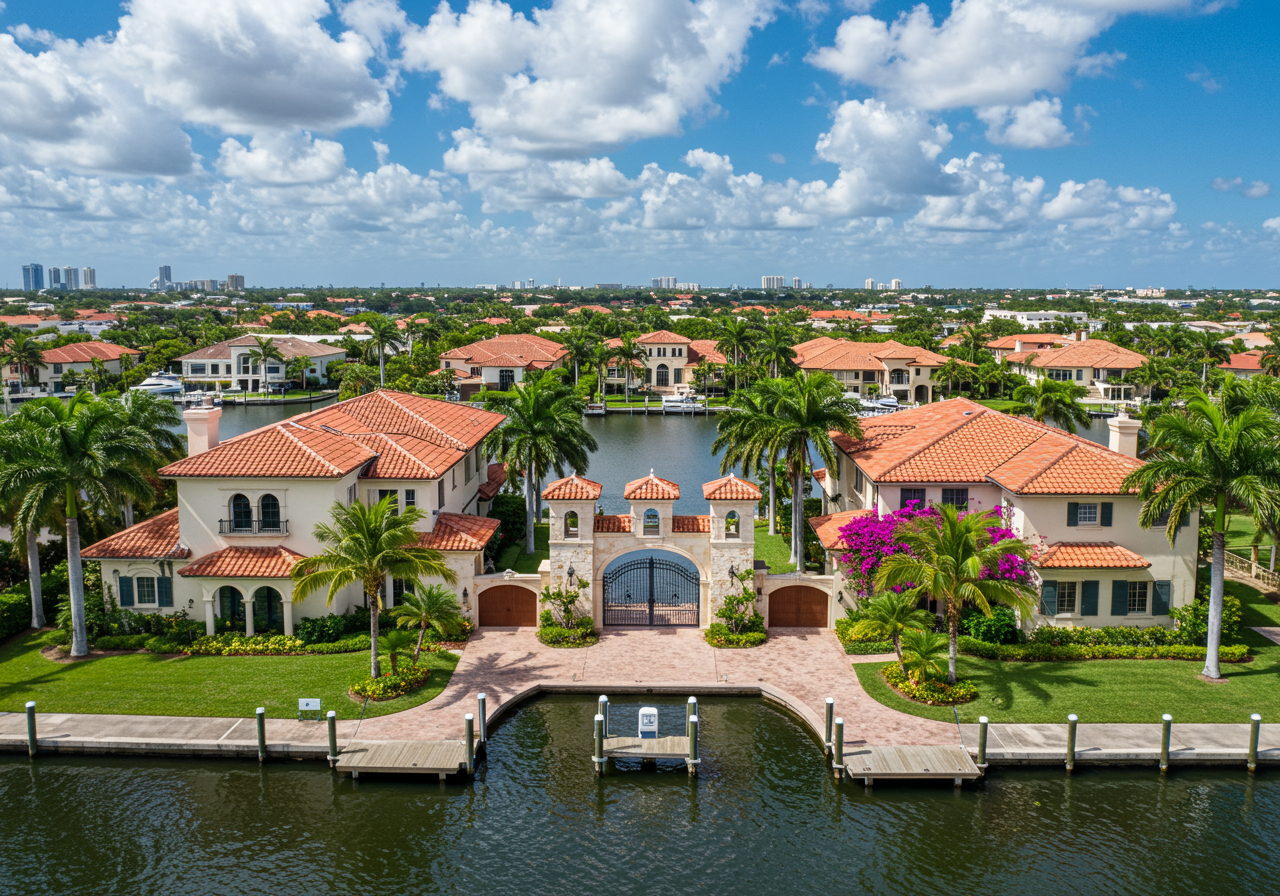
Cocoplum sits along Biscayne Bay and the Coral Gables Waterway, with most lots in FEMA Zone AE. Any property inside a FEMA Special Flood Hazard Area (Zone AE or VE) requires flood insurance if you finance it with a federally backed mortgage; cash buyers can technically waive it, but almost no South Florida buyer does. Citizens Property Insurance and a handful of private carriers will quote based on the elevation certificate, foundation type, and distance to the coast. Premiums range from a few hundred dollars a year for a high-rise condo unit above the base flood elevation to several thousand for an older single-family home near the water. The Hoffmann Group can pull the FEMA flood map and a preliminary insurance quote on any specific Cocoplum address before you go under contract.
Can I short-term rent (Airbnb or VRBO) a property in Cocoplum?▾
Cocoplum sits inside the City of Coral Gables, which prohibits rentals under one year in single-family districts. The Cocoplum HOA layers an additional minimum-lease requirement and tenant-approval process on top. Short-term rentals are not permitted in Cocoplum. On top of any city rules, the State of Florida requires every short-term rental to hold a DBPR vacation rental license and to collect both the 6% state sales tax and the local tourist development tax (6% in Miami-Dade, 6% in Broward, 6% in Palm Beach). The Hoffmann Group can pull the specific zoning designation and any existing condo or HOA declaration for any Cocoplum address before you write an offer that depends on rental income.